
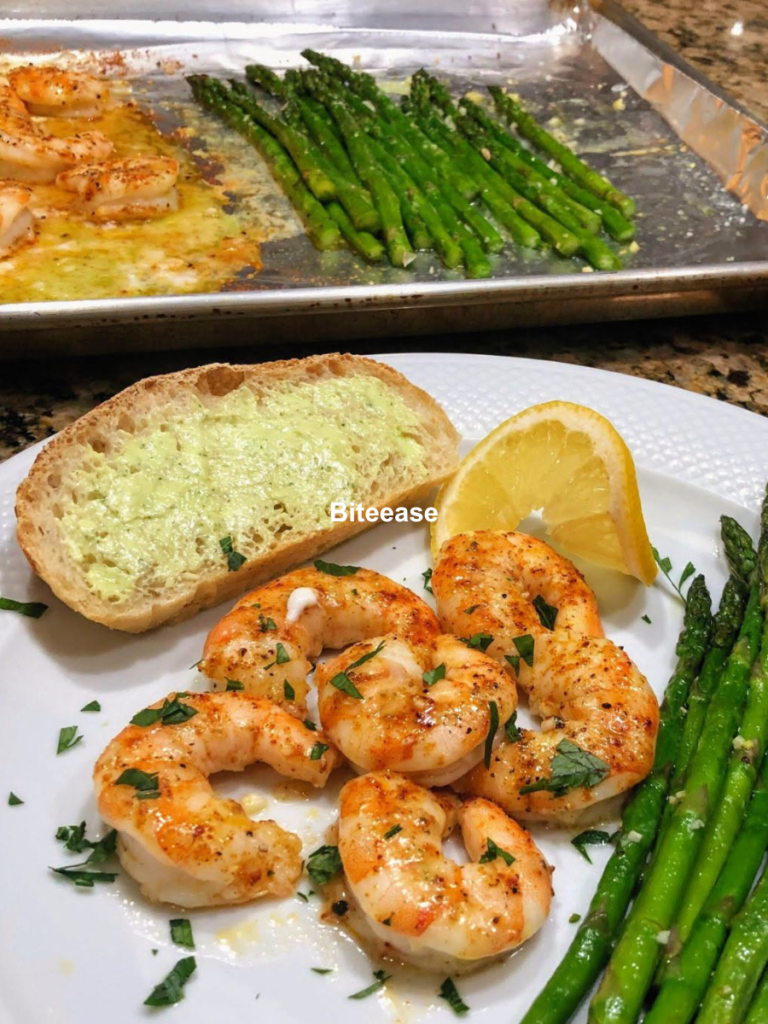
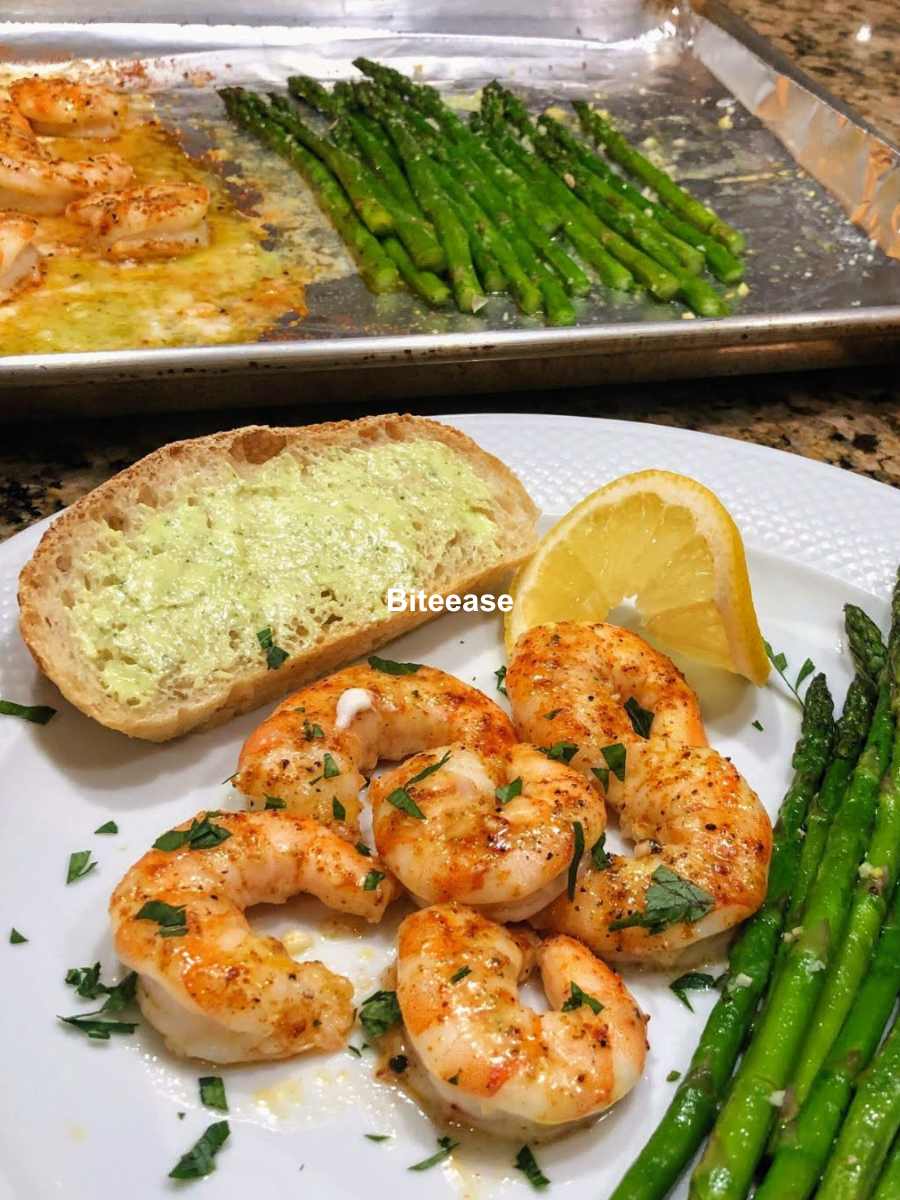
Instructions:
Step 1
Preheat the oven to 400°F (200°C).
Step 2
Line a sheet pan with parchment paper.
Step 3
Lightly coat the parchment with cooking spray.
Step 4
Place the asparagus on one side of the pan.
Step 5
Drizzle the asparagus with 1 tablespoon olive oil.
Step 6
Sprinkle half of the garlic, salt, and black pepper over the asparagus.
Step 7
Toss the asparagus until evenly coated.
Step 8
Bake the asparagus for 6 minutes.
Step 9
Place the shrimp on the empty side of the pan.
Step 10
Drizzle the shrimp with the remaining olive oil.
Step 11
Season the shrimp with paprika, the remaining garlic, salt, and black pepper.
Step 12
Scatter the butter cubes over the shrimp and asparagus.
Step 13
Return the pan to the oven.
Step 14
Bake for another 6 minutes until the shrimp are pink and fully cooked.
Step 15
Drizzle the lemon juice evenly over everything.
Step 16
Serve immediately while hot.
Tips and Variations:
Choose Large Fresh Shrimp
Large shrimp stay juicy during roasting and are less likely to overcook than smaller varieties.
Use Fresh Lemon Juice
Freshly squeezed lemon juice provides brighter flavor and enhances the natural sweetness of the shrimp better than bottled juice.
Add More Vegetables
Cherry tomatoes, broccoli, zucchini, mushrooms, green beans, or bell peppers roast beautifully alongside the shrimp and asparagus.
Boost the Flavor
Sprinkle grated Parmesan cheese, chopped parsley, Italian seasoning, or red pepper flakes over the finished dish for extra flavor and color.
Turn It Into a Complete Meal
Serve the shrimp and asparagus over pasta, steamed rice, quinoa, mashed potatoes, or cauliflower rice for a satisfying and well-balanced dinner.
Marinate the Shrimp First
Marinate the shrimp in olive oil, garlic, paprika, and lemon juice for 15 to 20 minutes before roasting to deepen the flavor.
Storage
Store leftovers in an airtight container in the refrigerator for up to 3 days.
Freeze for Later
Freezing is not recommended because cooked shrimp and asparagus may lose their texture after thawing.